

Introduction to Streaming Platforms in Nigeria
In an era where Nigerian music, film and literary content reaches global audiences through streaming platforms, questions about how creators are compensated and whether that compensation is fair and legally protected have never been more important.
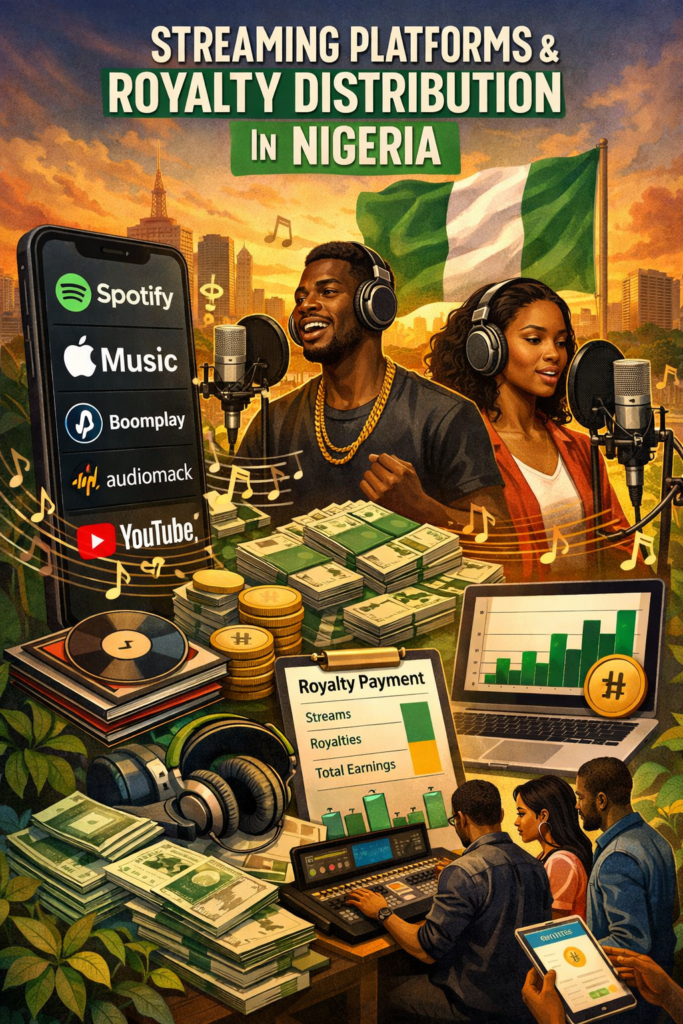
On platforms like Apple Music, YouTube, Spotify, Netflix, Boomplay, and Audiomack, Nigerian artists and content creators generate billions of streams. Yet debates persist on whether royalty distribution mechanisms are transparent, equitable, and aligned with Nigerian law.
This article explores how streaming royalties work in Nigeria, the legal framework governing intellectual property and royalties, the role of collecting societies, statutory obligations, leading case law principles, and the key challenges that Nigerian creators face in earning from digital streaming. This article seeks to provide a comprehensive legal analysis of streaming royalties in Nigeria and the mechanisms that determine how Nigeria’s cultural economy is monetised in the digital age.
1. Legal Basis for Copyright and Royalties in Nigeria:Streaming Platforms in Nigeria
1.1 Nigerian Copyright Act
The Copyright Act of Nigeria is the principal legislation governing copyright in creative works, including literary, musical, artistic, audiovisual, sound recordings and broadcasts. Under the Act:
- A “work” includes literary, musical, artistic, audiovisual, sound recordings and broadcasts
- The author and/or owner of the copyright has exclusive rights including radio broadcast, reproduction, distribution, and economic exploitation.
1.2 Exclusive Rights and Performers’ Rights
Under Section 63, copyright owners have exclusive economic rights to authorise or prohibit:
- Reproduction of their works;
- Public performance or communication to the public;
- Broadcasting and distribution;
- Rental or sale of recordings.
The Act also recognizes neighbouring rights, which are the basis upon which royalties are calculated and paid when content is streamed or broadcast online.
2. Streaming Platforms In Nigeria: Legal Nature and Royalty Triggers
2.1 What Triggers a Royalty?
Under the Copyright Act, a royalty is triggered by acts that constitute communication to the public, making available online, or public performance or reproduction of copyrighted content. Streaming involves:
- Online transmission (“making available to the public”) of audiovisual or musical content;
- Temporary or permanent reproduction in caching or servers;
- Playback by users;
- Monetisation through subscriptions or advertising.
All these acts entail copyright exploitation requiring authorisation — usually via a licensing agreement or collective management.²
2.2 Types of Streaming Royalties
Commercial streaming royalties generally fall into several categories:
- Mechanical royalties – for reproduction of musical works;
- Public performance royalties – for each time the content is streamed or made available;
- Synchronization royalties – where audio is paired with visuals (e.g., films, adverts);
- Neighbouring rights royalties – for performers and producers of sound recordings.
In Nigeria, these royalties are often collected via collective management organisations (CMOs) under statutory and agency regulation.
3. Collective Management Organisations and Licensing:
3.1 Nigerian Copyright Commission (NCC) Oversight
The Nigerian Copyright Commission (NCC) is empowered by the Copyright Act to regulate copyright and equitable remuneration, including licensing and collection by CMOs. The NCC establishes guidelines for licensing of rights; approval of tariffs; oversight of CMOs; enforcement actions against infringers.
3.2 Collecting Societies and Music Rights Organisations
Several CMOs operate in Nigeria for example:
- Copyright Society of Nigeria (COSON) – responsible for music rights management and royalty collection;
- AudioVisual Rights Society of Nigeria (AVRS) – focusing on film/visual rights.
These organisations negotiate licensing with broadcast and streaming platforms, collect royalties, and distribute them to members. Licensed streaming platforms pay royalties to CMOs which then distribute proceeds to rightsholders based on internal distribution rules.
For instance, COSON has agreements with platforms like YouTube, Boomplay, and other digital services to collect royalties on behalf of Nigerian music rights-owners.
4. Statutory and Regulatory Requirements for Royalty Distribution: Streaming Platforms In Nigeria
4.1 Copyright Act: Right to Remuneration
The Copyright Act recognises the right of copyright owners and performers to equitable remuneration when their works are exploited by broadcasters and other users. Section 88(6) empowers the NCC to establish tariffs and ensure fair licensing of works.
Where platforms make copyrighted works available without appropriate licences, they infringe the exclusive rights of authors and performers exposing them to injunctions and damages. The Act mandates that payment of royalties must be adequate, equitable, and timely.
4.2 Tariff Setting and Approval
The Act provides that regulations can be made for tariff schedules and equitable remuneration including how digital platforms should pay levies or royalties. This gives the NCC statutory grounding to determine licensing standards for streaming platforms and to approve royalty rates.
5. Challenges in Royalty Distribution for Streaming
5.1 Transparency and Accountability of CMOs
One common concern among Nigerian creators is the lack of transparency in how CMOs collect and distribute royalties. Disputes often arise over:
- Allocation methodologies;
- Delays in payment;
- Lack of audit rights for members.
While CMOs are regulated by the NCC, enforcement of internal accountability remains a challenge.
5.2 Digital Platform Compliance
Foreign streaming platforms may register outside Nigeria or collect revenues internationally, complicating enforcement of Nigerian law. However, where platforms generate revenue from Nigerian users or make Nigerian works available to Nigerian audiences, they are arguably subject to Nigerian copyright and tax laws.
5.3 Taxation and Royalties
The Nigeria Tax Code Act (NTA) 2025 and its attendant regulations affect how royalties are taxed in Nigeria. Streaming royalty payments to foreign entities (e.g., Spotify, YouTube) may attract withholding tax if the payment is sourced to Nigeria-based exploitation. Creators and CMOs must comply with tax laws in addition to copyright law.
6. Comparative and International Context: Streaming Platforms In Nigeria
6.1 The WIPO Internet Treaties
Nigeria is a member of key international instruments like the WIPO Copyright Treaty (WCT) and the WIPO Performances and Phonograms Treaty (WPPT). These treaties require member states to ensure that digital transmissions of works are adequately protected and that rights owners receive equitable remuneration.
6.2 EU Digital Single Market and Streaming
Although not binding on Nigeria, EU jurisdictions have developed regulatory frameworks requiring streaming platforms to secure licences, pay royalties, and ensure transparency trends that shape global norms. Nigerian law can draw on these comparative frameworks in crafting local policy.
7. Copyright and Royalties Enforcement
While there are relatively few Nigerian Supreme Court or Court of Appeal cases directly on streaming platform royalties, there are significant decisions on copyright enforcement and equitable remuneration.
Conclusion
Streaming platforms have revolutionised content distribution in Nigeria, creating new opportunities for artists and creators. However, ensuring that creators receive fair and legally enforceable royalties requires a legal ecosystem that combines the Copyright Act, effective collecting societies, regulatory oversight by NCC, and compliance by both local and foreign platforms.
Statutory rights, including exclusive rights to reproduction, public performance, and making available to the public, provide the foundation for royalties, while case law principles reinforce enforcement and equitable remuneration. Despite challenges in transparency, enforcement, and the cross-border nature of digital distribution, Nigerian law provides a solid framework for protecting creators. Continued statutory reform, stronger enforcement, and best practices in rights administration will be essential to ensure that Nigerian creators benefit fairly from the digital revolution.
Contributors

Lead Partner, EKO SOLICITORS & ADVOCATES

RINDAP NANJUL DANJUMA
Counsel, EKO SOLICITORS & ADVOCATES

CHINWENDU MBANU
Graduate Trainee, EKO SOLICITORS & ADVOCATES
Streaming platforms in nigeria, Streaming platforms in nigeria, Streaming platforms in nigeria, Streaming platforms in nigeria, Streaming platforms in nigeria, Streaming platforms in nigeria, Streaming platforms in nigeria