

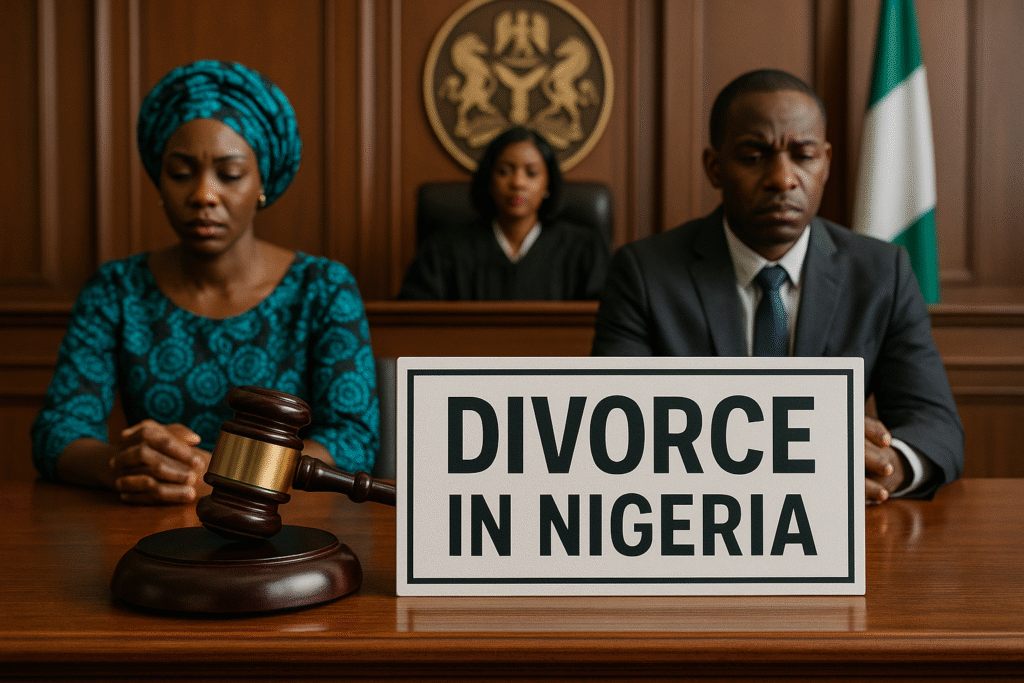
Introduction to Divorce in Nigeria
Divorce in Nigeria is a tough and personal journey. Indeed, it involves legal, cultural, and emotional challenges. So, knowing the divorce process is key. It helps you make good choices. The Matrimonial Causes Act of 1970 covers statutory marriages. However, customary rules guide traditional marriages. Thus, Divorce in Nigeria means dealing with legal steps and social pressures.
This guide gives a clear plan for Divorce in Nigeria. It covers legal reasons, steps, money matters, child custody, and cultural issues. Also, it provides helpful tips and kind support. As a result, you can face divorce with confidence. Your rights stay safe. Your journey becomes easier.
Understanding Legal Grounds for Divorce in Nigeria
In Nigeria, the Matrimonial Causes Act of 1970 guides divorce for statutory marriages. Courts allow divorce only if the marriage is fully broken. This is the only reason courts accept. However, you must show specific reasons to prove this. So, knowing these reasons is vital for Divorce in Nigeria. They help build a strong case.
The Act lists eight reasons for a broken marriage:
- Adultery: One spouse cheats, and the other cannot stay married. You may need proof, like statements or papers.
- Bad Behavior: This includes violence, heavy drinking, or actions that make living together hard.
- Desertion: One spouse leaves for at least one year without permission or a good reason.
- Separation: Living apart for two years (if both agree) or three years (if one does not agree).
- Other reasons include not completing the marriage, jail time for certain crimes, or mental health issues.
Notably, customary marriages use different ways to end. Cultural rules guide them. For example, family or community talks often settle these, avoiding courts. So, working with a lawyer who knows both statutory and customary laws is key. This helps you handle these differences well. In the end, knowing these reasons prepares you for Divorce in Nigeria with clarity.
Step-by-Step Guide to Filing for Divorce in Nigeria
Filing for Divorce in Nigeria follows a clear process under the Matrimonial Causes Act of 1970. This guide lists six steps to make the Nigeria divorce process easy and avoid problems.
- Hire a Lawyer: Get a family law expert. They check your case and suggest reasons (e.g., cheating, leaving). Importantly, they follow legal rules. This makes a strong case.
- Write the Petition: Your lawyer writes a form. It lists the divorce reason, marriage date, kids, and requests (e.g., custody, property). Also, include papers like the marriage certificate and proof.
- File at High Court: Send the form to a State High Court where you or your spouse live. Pay fees. Then, the court gives a case number and sends a notice to your spouse.
- Deliver the Petition: The court or lawyer gives the form to your spouse. They have about 28 days to reply. So, good delivery avoids delays.
- Go to Hearings: If the divorce is fought, both sides show proof in court. But, if both agree, it’s faster with fewer court visits.
- Get Divorce Orders: If the court agrees, it gives a Decree Nisi (first order). Later, about three months after, a Decree Absolute ends the divorce.
Notably, the process takes 7 months to 1.5 years. Case details, court schedules, and location change this. So, keep papers correct and get legal help to avoid mistakes.
Navigating Financial and Property Settlements
In Nigerian divorce cases, money and property matters are very important. So, these need careful thought to be fair. The Matrimonial Causes Act of 1970 guides them. Specifically, courts try to split assets fairly. Also, they focus on kids’ well-being. Thus, understanding these matters is key for Divorce in Nigeria. It leads to a fair result.
Key Factors in Financial Settlements
Courts look at money contributions, like income or property buys. Also, they value non-money roles, like childcare or housework. Plus, they check both spouses’ future needs. Assets include homes, savings, and items. For example, a shared home may be sold, splitting the money. Or, one spouse keeps it and pays the other. Sometimes, courts give alimony to a spouse who needs support or has custody. They check income, earning power, and living costs. Importantly, child support ensures kids’ needs are met.
Distribution of Assets and Responsibilities in Divorce in Nigeria
Fair splitting of assets and duties is key to Divorce in Nigeria. Courts check assets, like homes or savings, and duties, like support payments. For instance, a shared home may be sold, or one spouse pays the other to keep it. Alimony helps a spouse who needs it. Meanwhile, child support keeps kids safe. Luckily, mediation makes friendly agreements, cutting court fights. So, clear records of assets and debts are vital. Also, a lawyer makes sure agreements follow legal rules, keeping both sides safe.
In short, talk calmly through mediation. Keep asset records clear. Finally, work with a lawyer for a fair, easy settlement in Divorce in Nigeria.
Child Custody and Welfare: Divorce in Nigeria
In Nigerian divorce cases, child custody and well-being are top priorities. Courts focus on what’s best for the child under the Matrimonial Causes Act of 1970. So, this section explains custody choices and helps parents. Importantly, it keeps kids stable during Divorce in Nigeria.
Courts check the child’s age, emotional needs, and physical needs. Also, they look at each parent’s skills and bond with the child. For example, one parent may get full custody. Or, both parents share custody if they work well together. Often, mothers get custody of young kids, but this isn’t always true. The child’s well-being comes first.
Usually, the other parent gets visitation to stay close, unless it’s harmful. Plus, courts set child support based on parents’ money. This covers school, health, and living costs.
So, parents should work together and avoid hurting the child’s bond with the other parent. Luckily, mediation cuts conflict. Finally, a family lawyer makes sure custody plans follow legal rules and protect the child.
Cultural and Emotional Considerations
Divorce in Nigeria brings big cultural and emotional challenges. Social rules, family expectations, and beliefs shape it. So, handling these needs care and smart plans to stay well.
For example, many Nigerian communities judge divorce, especially for women. They may face shame or rejection. Also, customary marriages value family unity, making divorce tricky. As a result, families may try to settle or stop divorce, adding pressure. But, open talks with family set boundaries while respecting traditions.
Emotionally, divorce can cause guilt, shame, or worry. So, counseling or therapy helps build strength. Plus, support groups, online or in-person, offer a safe place to share. For parents, keeping a stable home and protecting kids from fights is key. Also, self-care like writing, exercise, or mindfulness eases stress. Importantly, a lawyer who knows Nigeria’s culture makes sure legal steps respect traditions while keeping your rights safe.
CONCLUSION
Mastering Divorce in Nigeria in 2025 means knowing legal reasons, steps, money matters, custody, and cultural issues. For example, filing a petition and splitting assets can be tough. But, this guide gives clear steps for an easy process. So, hire a good lawyer to keep your rights safe and follow legal rules. Also, focus on your well-being and kids’ needs with mediation and support groups. Ready to start your Nigeria divorce process? Begin now by contacting a family lawyer and facing the journey with confidence!