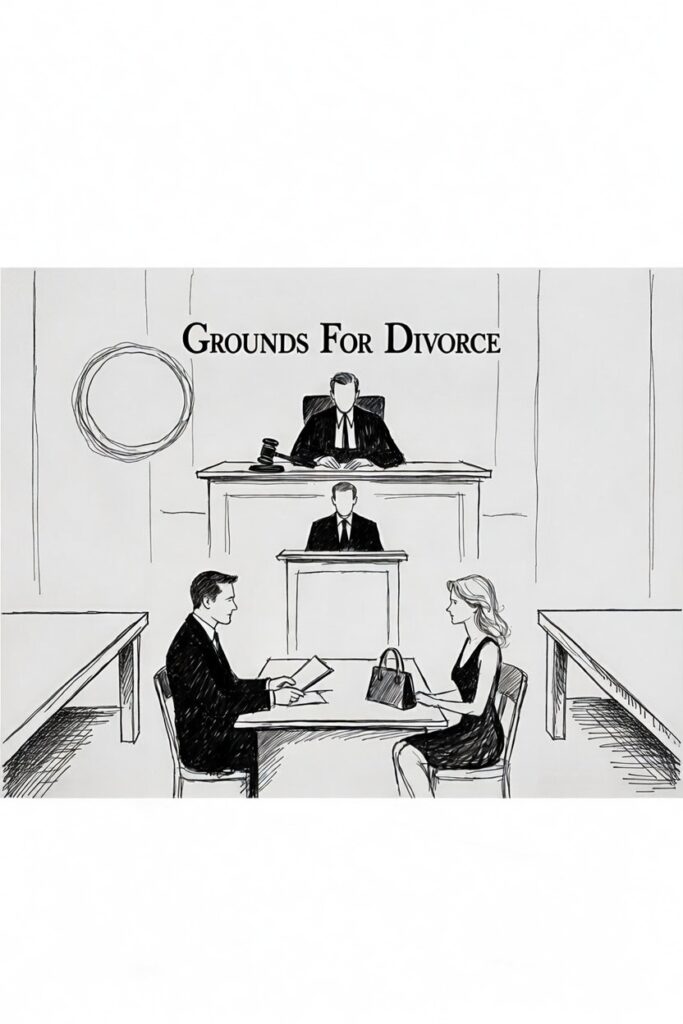
Mariah’s car came to a halt in front of Katherina’s law office, located on the ground floor of the Kings Court Commercial Complex in the heart of Calabar. Her plumpy silhouette was amplified against the scorching sunrise as she stepped out, her mind heavy with thoughts of Grounds for divorce. She walked briskly toward the entrance of the law firm, where her friend Katty, a seasoned divorce attorney with a decade of legal practice, awaited. Their friendship, forged during their undergraduate days at the University of Calabar, Cross Rivers State, Nigeria, made Katty her confidante in this crisis.
The doorbell chimed as Mariah pushed through the glass door, bypassing the secretary and heading straight to the office marked “Managing Partner.” Then, “Katty, Katty, Katty,” Mariah gasped, her voice trembling, “My world has finally crumbled. Javin Akpan has finished me.” Tears streamed down her cheeks as she tossed a court envelope onto Katty’s desk, revealing Javin’s divorce petition. Subsequently, pacing, she recounted the subtle signs her instincts had picked up before and after Javin’s travels. Finally, with a nod to her secretary, Mariah signaled for privacy, and the door was closed.
Understanding The Grounds for Divorce in Nigeria
Katty glanced at the divorce petition with focus. After a moment, she calmly set it down. “We’ll respond,” she said, “but first, let me explain divorce under Nigerian law.”
“Mariah, marriage is a lifelong vow, but divorce isn’t the end. For instance, it’s a legal step to end a marriage when one partner walks away. To handle divorce well, we must know the grounds for ending a marriage under Nigeria’s Matrimonial Causes Act, 1970.”
Section 15(1) of the Act sets one main ground for divorce: the marriage has broken down beyond repair. This means no hope remains for fixing it. Each divorce case differs, but the law sets clear rules. Mariah, for example, a divorce happens when a marriage is beyond saving—impossible to restore. People’s reasons for divorce vary, but they must fit Nigeria’s matrimonial laws.
Core Grounds for Divorce Under Section 15(2)
Section 15(2) lists eight signs to prove a marriage cannot be saved, guiding courts in divorce cases. These signs, therefore, help answer: “Is the marriage truly over?”
The grounds for divorce include:
- The spouse refuses to consummate the marriage.
- The spouse commits adultery, and the other cannot live with them.
- The spouse’s actions, like cruelty, make living together unreasonable.
- The spouse deserts the other for one year before the divorce filing.
- Both live apart for two years, and the spouse agrees to divorce.
- Both live apart for three years before the filing.
- The spouse ignores a court order to restore conjugal rights for one year.
- The spouse’s long absence suggests they are dead.
Why Section 15 Promotes Fairness
Section 15 focuses on whether the marriage is broken, not on blaming anyone. Courts, therefore, aim to resolve issues, not punish. This approach upholds marriage’s value and reduces conflict. Moreover, it treats both parties equally, moving away from old, unfair views, ensuring fair remedies in divorce.
Supplementary Grounds For Divorce Under Section 16
Section 16 adds unique grounds for divorce, supporting Section 15(2)(c) and (h). Courts need clear proof the marriage cannot be saved. For example, even if grounds are proven, a judge may deny divorce if reconciliation seems possible or proof is weak. This, consequently, keeps divorce fair and not too easy.
Section 16(1) lists extra grounds for divorce:
- The spouse commits rape, sodomy, or bestiality.
- For two years, the spouse habitually abuses alcohol or drugs.
- Within five years, the spouse faces convictions totaling three years in prison and leaves the other without support.
- The spouse serves three years or more in prison for serious crimes and stays incarcerated.
- Within one year, the spouse tries to murder or harm the other.
- For two years, the spouse fails to pay agreed or court-ordered support.
- The spouse, with no hope of recovery, stays confined for mental illness for five years within six years.
Presumption of Death in Divorce
Section 16(2) allows divorce if a spouse is absent for seven years with no proof of being alive. Courts, in this case, grant divorce based on presumed death, unless evidence shows the spouse was alive. This dissolves the marriage due to long absence.
Mariah’s Path Forward
Section 15 sets the divorce framework, while Section 16 ensures careful review with extra grounds. These laws, therefore, keep the divorce process fair and thorough for Mariah.
Mariah’s Journey Beyond Divorce
Mariah faced a tough divorce. Courts may push for reconciliation through counseling, unless serious issues like violence exist. With Javin’s divorce petition, Mariah must review the grounds and plan her response using Sections 15 and 16. Though the emotional weight of divorce was heavy, legal clarity gave her a path. Mariah, consequently, saw divorce not as her world’s end but as a step to a new start.
CONTRIBUTORS

Managing Partner EKO SOLICITORS & ADVOCATES

Counsel EKO SOLICITORS & ADVOCATES