

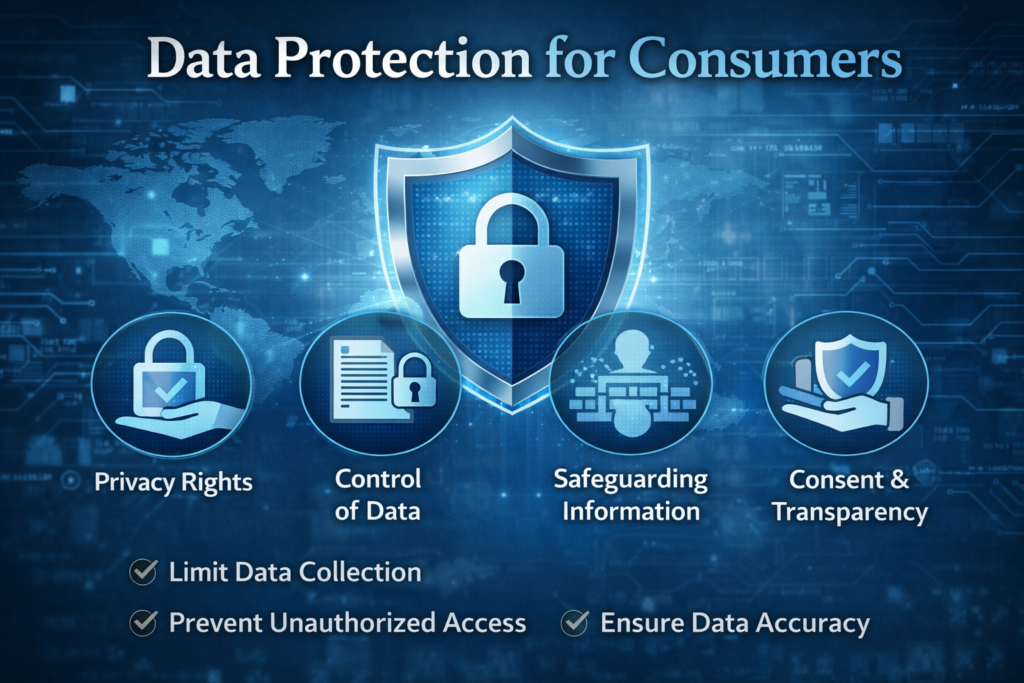
Introduction to Consumer Data Protection
Nifemi just ordered a pair of trendy sneakers and a laptop online. The price was unbelievably low coupled with extensive coupon cards. The delivery was fast but things weren’t what they seemed. On a closer inspection, nifemi noticed the sneakers were different from what she ordered and had a missing sole. She messaged the customer care and reported the transaction and asked for a refund.
The customer care for the website stated that she would be refunded but after weeks of waiting, she recieved nothing. During the wait, she started noticing unusual ads following her across apps and social media. She ignored it at first.
But when she saw conversations online circulating about investigations into a major e-commerce platform, many Nigerians like Ada started asking a bigger question: what happens to our data after we shop on online platforms.
What Is Temu and Why Is It Under Scrutiny? Data Protection
Temu is an international e-commerce platform that offers low cost goods to consumers directly all over the world. Temu’s rapid rise in the Nigerian online shopping sector has attracted not only consumers but regulators. There have been growing concerns regarding temu and it usually revolves around:
- Data privacy practices
- Product quality complaints
- Consumer protection issues and many more
The legal spotlight has intensified as Nigerian regulators pay closer attention to the foreign digital platforms operating within the country.
Data Protection in Nigeria
The Nigeria Data Protection Act 2023 is the primary legislation governing personal data protection, replacing the NDPR. The Act establishes the legal foundation for protecting personal data in Nigeria. It establishes the Nigeria Data Protection Commission (NDPC) to regulate data processing, safeguard citizen rights, and enforce compliance. It applies to both data controllers and processors, imposing strict obligations on data handling.
Under the Act:
- Consent must be clear and informed
- Data controllers must ensure adequate security measures
- Data must be collected transparently and lawfully
- Cross border transfers require adequate protection.
The Role of the NDPC
The Nigerian Data Protection Commission is the body responsible for enforcing data protection laws. The Act empowers it with investigative powers and power to impose penalties for violations.
For digital platforms, non-compliance is no minor risk. It carries reputational and financial consequences.
Consumer Rights in the Digital Marketplace
Data protection is one side of a coin. The other side is consumer protection. The primary legislation protecting consumers in Nigeria is the Federal Competition and Consumer Protection Act, 2018 (FCCPA). When enacted in 2019, it established the Federal Competition & Consumer Protection Commission (FCCPC).The Commission uses the Act to protect Nigerian consumers against unfair trade practices, misleading advertising, and defective products.
The Act provides:
- The right to accurate information
- The right to safe and quality goods
- Protection from unfair contractual terms
- Right to seek refunds or redress
The Federal Competition and Consumer Protection Commission enforces consumer rights in Nigeria.
If there are complaints involving misleading descriptions, fake discounts, unsafe goods, or refund challenges, the FCCPC has jurisdiction to investigate.
4 Key Issues Behind Temu’s Probe in Nigeria Data Protection
- Data Privacy and User Consent: Did users give informed consent before their data was collected?
Under Nigerian law, consent must be explicit, specific, and freely given. Long, vague privacy policies may not meet legal standards if they fail to clearly explain how data is used.
- Product Quality and Misrepresentation: Online marketplaces often rely on third party sellers but if products delivered differ significantly from what was advertised. This could amount to misrepresentation under consumer protection laws. For example if tunde orders a set of cooking pots and instead receives a set of toy cooking utensils, it can amount to misrepresentation.
- Refunds, Returns, and Consumer Redress: One recurring concern in cross border e-commerce is dispute resolution. Are refund processes accessible? Are return policies transparent? Can Nigerian consumers easily enforce their rights?
These questions are key issues regarding the temu Probe in Nigeria.
- Cross-Border Data Transfers
As a foreign platform, data may be stored outside Nigeria.
The Nigeria Data Protection Act requires safeguards when transferring personal data internationally. Authorities may examine whether such safeguards were properly implemented.
What This Means for Nigerian Consumers
The probe signals one thing clearly:
Digital platforms are not above Nigerian law. For consumers, this means:
- Greater awareness of privacy rights
- Stronger enforcement of refund policies
- Increased accountability from online marketplaces
Consumers should always: read privacy policies, understand return policies, keep transaction records and report suspicious practices from online marketplaces.
What This Means for Digital Businesses Operating in Nigeria
The Temu probe in Nigeria is a wake-up call not just for foreign platforms, but also for Nigerian startups and e-commerce operators.
Compliance must now include: data protection audits, clear privacy notices, transparent pricing structures and efficient complaint resolution mechanisms.
Conclusion Data ProtectionData
Nifemi eventually recieved her refund after a few months. But the experience changed how she shops online and that is the larger lesson behind the Temu probe in Nigeria.
Nigeria’s digital marketplace is expanding rapidly. With growth comes responsibility for platforms, regulators, and consumers alike.
Data protection and consumer rights are no longer optional compliance boxes to tick. They are foundational pillars of trust in the modern economy.
The future of e-commerce in nigeria belongs to platforms that respect both data and dignity in Nigeria.
Contributors

Lead Partner, EKO SOLICITORS & ADVOCATES

Cole Anjola-jesu Beulah
Graduate Trainee, EKO SOLICITORS & ADVOCATES