

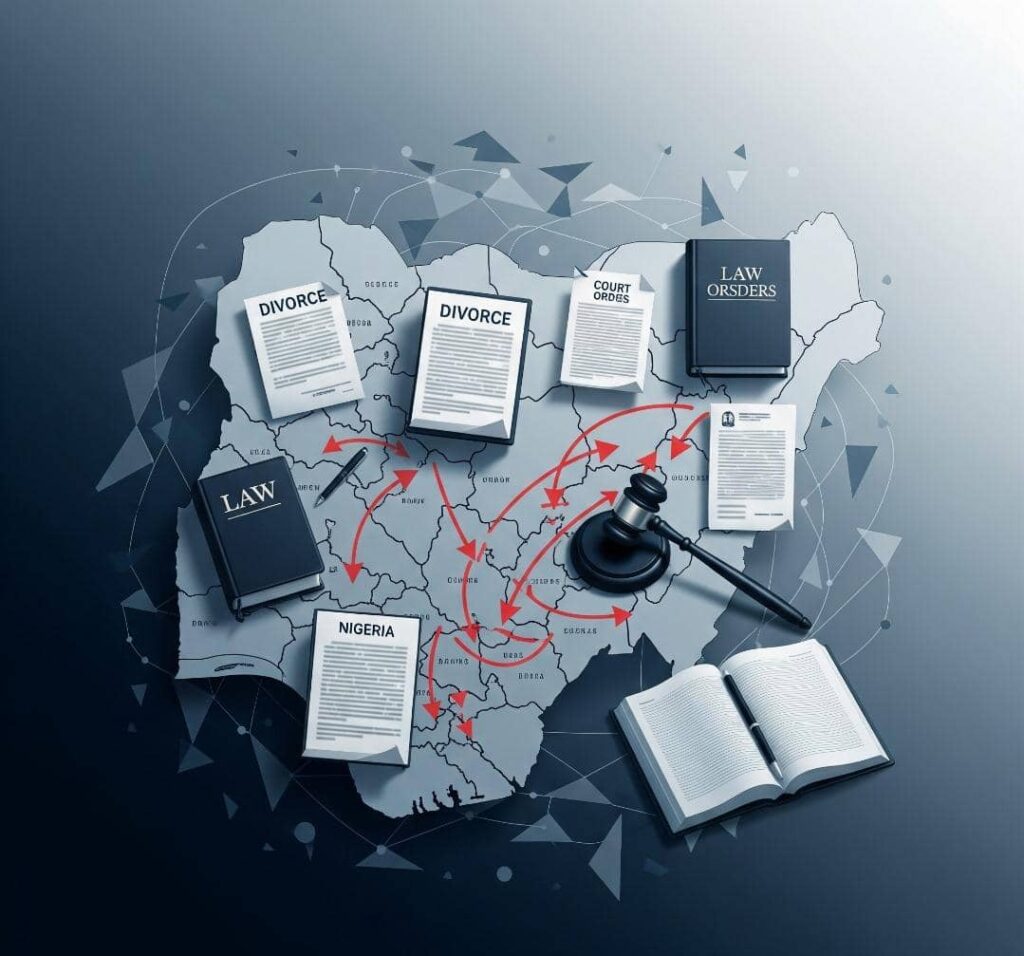
Statutory Marriage Dissolution in Nigeria
In Nigeria, statutory marriages end only through a spouse’s death or formal divorce cases in court. For instance, this rule applies to all legally recognized marriages, including those under civil law. Consequently, divorce cases require a structured legal process to dissolve statutory unions, unlike other marriage types.
Court Jurisdiction for Divorce Cases
Customary marriages dissolve in any customary court across Nigeria. In contrast, Section 2 of the Matrimonial Causes Act mandates that statutory divorce cases be filed in State High Courts. Therefore, lawyers must navigate this legal framework to initiate divorce cases, ensuring compliance with national regulations.
Choosing Courts Strategically for Expedited Divorce Cases
The Act allows lawyers to file divorce cases in any State High Court, regardless of where the parties live or the marriage occurred. As a result, lawyers often select courts with fewer pending cases to secure shorter adjournments. For example, courts with lighter caseloads can schedule hearings sooner. Consequently, shorter adjournments speed up divorce case resolutions, reducing the overall time for litigation.
Balancing Efficiency and Accessibility
Courts often disregard the distance between the parties’ homes and the chosen court. Specifically, they recognize that lawyers select distant courts to hasten divorce cases. Moreover, this choice prioritizes efficiency over convenience, as faster proceedings benefit clients. However, courts ensure this practice aligns with fair judicial processes.
Curbing Exploitation of Remote Jurisdiction in Divorce Cases
Occasionally, a party objects to a court’s jurisdiction in a divorce case, arguing that the petitioner filed in a distant court to create obstacles. For instance, choosing a far-off court may burden the respondent with travel costs or time constraints. Courts, therefore, frown upon such tactics and may refuse to hear the divorce case if the location is deemed inconvenient. As a result, this prevents deliberate misuse of the distance rule.
Handling Jurisdictional Objections
When a respondent challenges a court’s jurisdiction, the court may pause the divorce case. Subsequently, the petitioner must refile in a closer court to ensure fairness. For example, courts prioritize accessibility to both parties to uphold justice. Thus, this process prevents exploitation of the distance rule in a divorce case.
Conclusion: Fairness in Divorce a Case
In summary, Nigerian lawyers choose distant courts to expedite divorce cases by leveraging lighter caseloads. However, courts maintain fairness by dismissing such divorce case filed in overly inconvenient jurisdictions. Consequently, this balance ensures both efficiency and accessibility in Nigeria’s divorce case proceedings, protecting all parties involved.
