

Introduction
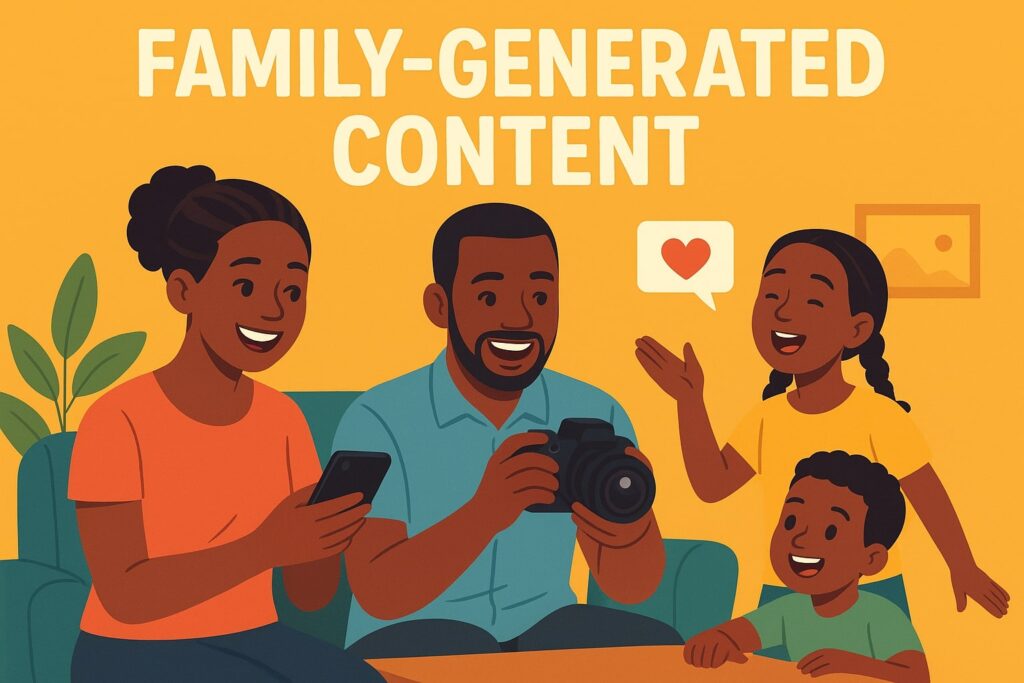
The rise of social media has turned family-generated content into a lucrative avenue for creativity and income in Nigeria. From hilarious TikTok skits to heartwarming Instagram reels, families like the Bamideles have captured audiences with their unique blend of talent and relatability. Funmi writes the scripts, Dele shoots and edits the videos, and their children, Titi and Femi, shine as the on-screen stars. Funmi also manages the social media accounts and secures brand deals, but every family member contributes to their viral success. However, as their family-generated content grows in popularity, disagreements arise: Funmi claims ownership of the scripts, Dele insists he owns the content as the uploader and editor, and Titi and Femi argue their performances drive the page’s fame.
This scenario raises critical questions: Who owns family-generated content, and who should benefit from its earnings? This article explores the intersection of intellectual property, Nigerian copyright law, and the complexities of collaborative family-generated content in the digital age.
Understanding Copyright in Nigeria
Copyright is a cornerstone of intellectual property law, protecting original works such as scripts, videos, music, and performances. In Nigeria, the Copyright Act 2022 (Section 2) safeguards literary, musical, artistic, audiovisual works, sound recordings, and broadcasts. Copyright is automatically granted upon creation, giving the author exclusive rights to reproduce, distribute, display, or create derivative works.
Registration, while not mandatory, is advisable to establish a public record of ownership, admissible in court as proof (Section 12, Copyright Act 2022). Importantly, copyright protects the expression of ideas, not the ideas themselves. In Tate v. Thomas (1921), a case cited in Nigerian legal contexts, a person who conceived the idea for a play was denied copyright because the plaintiffs fixed the work through lyrics, dialogue, and music. For the Bamideles, this means Funmi’s scripts, Dele’s edited videos, and Titi and Femi’s performances are all potentially copyrightable elements of their family-generated content.
What Counts as Intellectual Property in Family-Generated Content?
Intellectual property (IP) encompasses creations of the mind, including videos, scripts, performances, and branding, protected under copyright, trademark, or patent law. In family-generated content, IP includes:
- Social media videos posted on platforms like TikTok and Instagram.
- Scripts and storylines crafted for skits.
- Catchphrases or slogans unique to the family’s brand.
- Original background music composed by family members.
- Distinct character personas or family branding.
The informal nature of family-generated content often leads to ambiguity. Unlike commercial productions with clear contracts, family collaborations like the Bamideles’ are spontaneous, with contributions from scripting to acting to editing. Without formal agreements, determining ownership becomes complex, especially when disputes arise over who controls the content or its earnings.
Authorship: Joint Versus Individual Copyright
The Copyright Act 2022 (Section 108(1)) defines joint authorship as “a work produced by the collaboration of two or more authors in which the contributions of the authors are merged into inseparable or interdependent parts of a whole.” In such cases, all contributors co-own the copyright and share equal rights to use or license the work. For the Bamideles, Funmi’s scripts, Dele’s videography and editing, and Titi and Femi’s performances are intertwined, suggesting joint authorship.
However, Nigerian law allows one co-owner to assign or license the work without the others’ consent, with the effect as if all co-owners agreed (Section 30(5)). This provision complicates the Bamideles’ situation: if Funmi licenses a skit to a brand, it legally binds all contributors, even if Dele or the children disagree.
The lack of formal agreements in family-generated content often leads to assumptions about ownership. Funmi, as the account manager, may control uploads and monetisation, but this doesn’t negate Dele’s editing contributions or Titi and Femi’s on-screen roles. Without clear discussions, disputes over credit and earnings can fracture family dynamics.
The Issue of Consent in Assignment or Licensing
Joint authorship implies shared control, but the Copyright Act’s provision allowing one co-owner to act unilaterally (Section 30(5)) raises ethical concerns in family-generated content. For example, if Dele licenses a video to a brand without consulting Funmi, Titi, or Femi, the deal is legally valid, but it may breed resentment.
Consent becomes even more critical when minors are involved. Titi and Femi, as performers, contribute significantly, but their parents can legally consent on their behalf under Nigerian law. This raises questions about implied consent in family settings, where participation may be assumed but not explicitly documented.Potential Legal Issues and Disputes in Family-Generated ContentDisputes in family-generated content can arise in several ways:
- Unauthorised Use: If Funmi posts a skit without Dele’s or the children’s consent, it could spark conflict, though the Copyright Act’s provision (Section 30(5)) may deem it authorised. This legal nuance often surprises families who assume collective consent is required.
- Ambiguity Over Joint Authorship: When contributions are inseparable—like scripts, editing, and performances—it’s challenging to assign ownership. The Bamideles’ skits blend Funmi’s writing, Dele’s technical expertise, and the children’s charisma, making individual claims difficult.
- Monetisation and Commercial Exploitation: As family-generated content attracts brand deals or ad revenue, disagreements over profit-sharing emerge. If Funmi secures a lucrative deal, should she keep the earnings as the manager, or should they be split among all contributors?
- Privacy and Child Protection: Featuring minors like Titi and Femi raises privacy concerns. While parents can consent on their behalf, the Child Rights Act 2003 emphasises protecting children from exploitation. Publicly sharing family-generated content involving minors without clear consent frameworks risks ethical and legal scrutiny.
Children as Content Creators: What Does Nigerian Law Say?
Titi and Femi’s central role in the Bamideles’ skits highlights the unique challenges of child influencers in family-generated content. Nigeria lacks specific laws regulating child performers in digital spaces. The Child Rights Act 2003 focuses on general child protection but doesn’t address modern issues like digital labor, consent for public display, or financial management of social media earnings.
In contrast, the U.S. Coogan Law mandates that a portion of child performers’ earnings be held in trust, a safeguard absent in Nigeria. Without such protections, Titi and Femi’s contributions could be exploited, with earnings controlled solely by their parents. This gap in Nigerian law underscores the need for families to proactively address children’s rights and financial interests in family-generated content.
So, Who Really Owns It?
In the absence of formal agreements, Nigerian copyright law presumes joint authorship for family-generated content where contributions are inseparable. For the Bamideles, Funmi, Dele, Titi, and Femi are co-owners of their skits, sharing rights to use, license, and profit from the content.
However, the law’s allowance for unilateral licensing (Section 30(5)) complicates matters, as one family member’s actions can bind the others. Ethically, credit, earnings, and consent should reflect the collaborative nature of family-generated content. Practically, the Bamideles must navigate these issues to maintain harmony and fairness.
The Way Forward
To avoid disputes, families creating family-generated content can take proactive steps:
- Document Contributions: A simple written agreement outlining each family member’s role (e.g., Funmi as scriptwriter, Dele as editor, Titi and Femi as performers) clarifies ownership and expectations.
- Discuss Monetisation Openly: Agree on how earnings from brand deals or ad revenue will be shared, ensuring fairness for all contributors, including children.
- Protect Children’s Interests: Consider setting up a trust or savings account for Titi and Femi’s earnings, mirroring protections in other jurisdictions.
- Formalise Consent: Document consent for content featuring minors, balancing parental authority with children’s growing autonomy.
- Register Copyrights: While not mandatory, registering skits with the Nigerian Copyright Commission strengthens legal claims in disputes.
Conclusion
As family-generated content continues to thrive on platforms like TikTok and Instagram, Nigerian families like the Bamideles must navigate the legal and ethical complexities of intellectual property and earnings. Joint authorship under the Copyright Act 2022 offers a framework for shared ownership, but without clear agreements, disputes over control and profits can arise.
By documenting contributions, discussing monetisation, and prioritising child protection, families can ensure that family-generated content remains a source of creativity and unity, not conflict. As Nigeria’s digital economy grows, the legal system must evolve to address the unique challenges of family-generated content, ensuring all contributors—parents and children alike—get their fair share of the spotlight.

Ojienoh Segun Justice Esq.,
Lead Partner, EKO SOLICITORS & ADVOCATES

Bessie Obort Ofuka