

You may think that divorce process in Nigeria is as simple as both parties signing divorce papers.
If you’ve ever watched a Nollywood movie or an American drama, you’ve probably seen the scene: one angry spouse storms into a room, throws a document on the table, and says, “Sign it. I’m done.” The other spouse, wounded but dignified, picks up a pen, signs, and just like that, the marriage is over.
But it’s also completely wrong, at least when it comes to how divorce works in Nigeria.
Before we go further, let’s set this straight: you do not sign divorce papers in Nigeria. The real divorce process in Nigeria is not about signing papers; it’s a legal procedure which the court handles under the Matrimonial Causes Act (MCA) 1970.
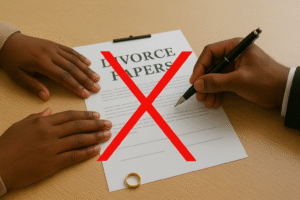
Understanding Divorce Process in Nigeria
Divorce, in Nigerian law, is far more than a disagreement between two people. It is the formal dissolution of a marriage by a court of law. Under the Matrimonial Causes Act, once you are married under the law, whether at the registry or a licensed church, only a High Court can declare that union legally over.
Marriage is a legal status, not a personal contract that two people can end by mutual agreement.
So, if no one actually signs “divorce papers,” are there any documents?
When a person decides to exercise their divorce rights, they begin the divorce process in Nigeria by filing a petition for dissolution of marriage. This petition explains the reasons the marriage has broken down irretrievably.
The petitioner, that is, the spouse filing for divorce, signs this document, along with a verifying affidavit and other attachments such as the marriage certificate. When the court accepts the petition, it is served on the respondent, the other spouse. They may sign an acknowledgment of service or file a response, through their lawyers, if they intend to contest it.
So yes, signatures appear on certain legal forms. But those are procedural signatures, not the “final divorce papers” that magically dissolve a marriage. The only document that ends a marriage in Nigeria is the Decree Absolute, which the judge signs, not the spouses.
How to Begin Divorce Process in Nigeria
You may wonder where and how to file for divorce in Nigeria. One major point of confusion is where to start the divorce process in Nigeria.
Under the law, only a High Court has jurisdiction to hear and determine matrimonial causes. This means that if you celebrated your marriage under the Marriage Act (i.e., a statutory marriage), a Magistrate Court or customary court cannot dissolve it.
Are Divorce Papers Really Signed in Nigeria?
The short answer is no, not in the way movies make it seem.
You may sign documents during the divorce process in Nigeria, like petitions or affidavits but those are just steps along the way. The real dissolution happens when the court issues a Decree Absolute, signed by the judge, not by the couple.
CONTRIBUTORS

Lead Partner EKO SOLICITORS AND ADVOCATES

Counsel EKO SOLICITORS AND ADVOCATES

Intern EKO SOLICITORS AND ADVOCATES