

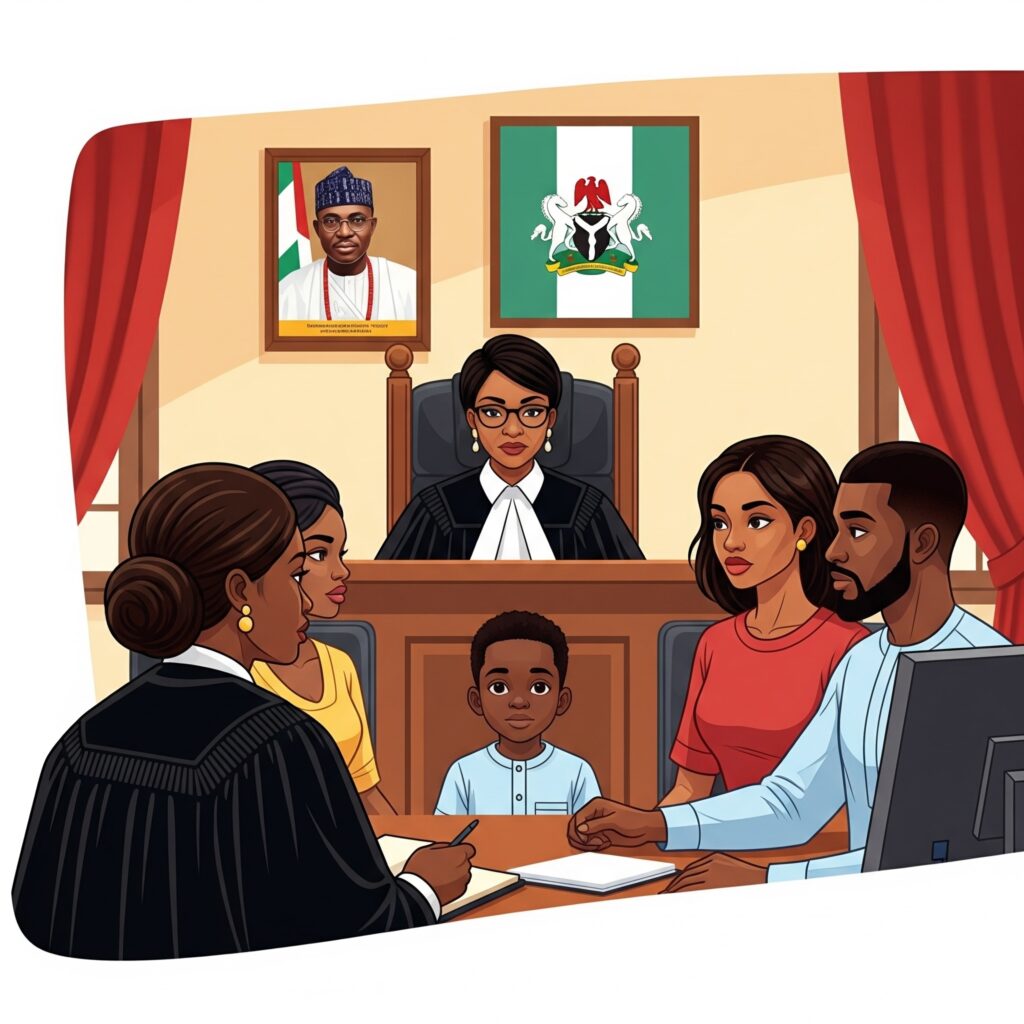
Custody Wars in Nigeria.
Custody wars in Nigeria are increasingly common, especially in divorce and Judicial separation cases. The question of who should have custody of a child is not just legal — it’s emotional, cultural, and at times, religious.
Understanding how these custody disputes are mostly resolved under Nigerian law helps parents better to better navigate this sensitive process.
⚖️ What Is Child Custody?
Child custody refers to the legal responsibility and decision-making authority over a child’s upbringing. This includes both:
- Legal Custody: The right to make major decisions about the child’s health, education, and welfare.
- Physical Custody: Who the child lives with on a day-to-day basis.
During custody wars in Nigeria, courts decide whether one or both parents should share these rights.
🏛 Types of Custody in Nigeria
There are three primary custody types that courts recognize:
1. Sole Custody
One parent is granted full physical and legal custody.
2. Joint Custody
Both parents share legal custody and decision-making, though the child may primarily reside with one.
3. Split Custody
Rarely used — different children are placed with different parents.
Each type plays a role in how custody wars in Nigeria are argued and decided.
📚 What Laws Govern Custody Wars in Nigeria?
➤ Child’s Rights Act (CRA) 2003
The most important legislation in custody cases. It places the best interest of the child as the top priority.
Courts consider:
- Emotional and psychological needs
- Financial capacity
- Parental availability
- Moral and religious upbringing
➤ Matrimonial Causes Act
Applies to statutory marriages. It guides custody, maintenance, and guardianship during divorce.
➤ Customary and Islamic Law
When the CRA isn’t domesticated in a state, courts refer to general common law, customary laws, or Sharia—based on the parents’ backgrounds..
📝 How to Apply for Custody in Nigeria
1. File a Petition
Submit a petition in a High Court, Magistrate Court, or Sharia Court based on your case type and marital status.
2. Prepare Legal Documents
Key documents include:
- Child’s birth certificate
- Affidavits stating reasons for custody
- Financial records
- Character references
3. Attend Court Hearings
Both parents present their case. Courts may appoint social workers to inspect home environments.
In many custody wars in Nigeria, this assessment heavily influences the judge’s decision.
🧠 What Courts Consider in Custody Battles
Courts examine the following to decide custody:
- The child’s age and gender
- The quality of each parent’s care
- Emotional, moral, and educational needs
- History of abuse or neglect
- Parental behavior and stability
Courts may grant temporary (interim) custody during hearings to safeguard the child.
Additionally, they resolve visitation rights and child maintenance alongside custody.
🌍 Cultural and Religious Impact on Custody Wars in Nigeria
In many cases, religious and cultural norms guide court decisions. For instance:
- Islamic law may prioritize mothers until a certain age.
- Customary law might favor fathers, especially if bride price was paid.
These beliefs make custody wars in Nigeria more nuanced and often more contentious.
🔄 Can Custody Be Changed?
Yes. Custody is not permanent. If major life changes occur — like relocation, abuse, or remarriage — a parent may seek a custody modification.
The court will always return to the principle of the child’s best interest.
👨⚖️ How EKO Solicitors Can Help
Custody wars in Nigeria require legal skill, emotional intelligence, and a deep understanding of Nigerian law. At EKO Solicitors, we provide expert guidance in:
- Filing custody applications
- Representing clients in court
- Negotiating child support and visitation
- Handling custody disputes involving international or cross-cultural elements
👉 Book a free consultation today and let us guide you toward a fair and child-centered resolution.
✅ Conclusion
Custody decisions in Nigeria are guided by both law and love. The courts aim to protect children above all else. However, parents must be well-prepared — legally and emotionally — to navigate these disputes.
Whether you’re starting the process or seeking a custody modification, trust EKO Solicitors to stand with you in your legal journey.
CONTRIBUTORS

Lead Partner EKO SOLICITORS & ADVOCATES

Counsel EKO SOLICITORS AND ADVOCATES
OLUWAPELUMI OMOBOLAJI AJAYI