

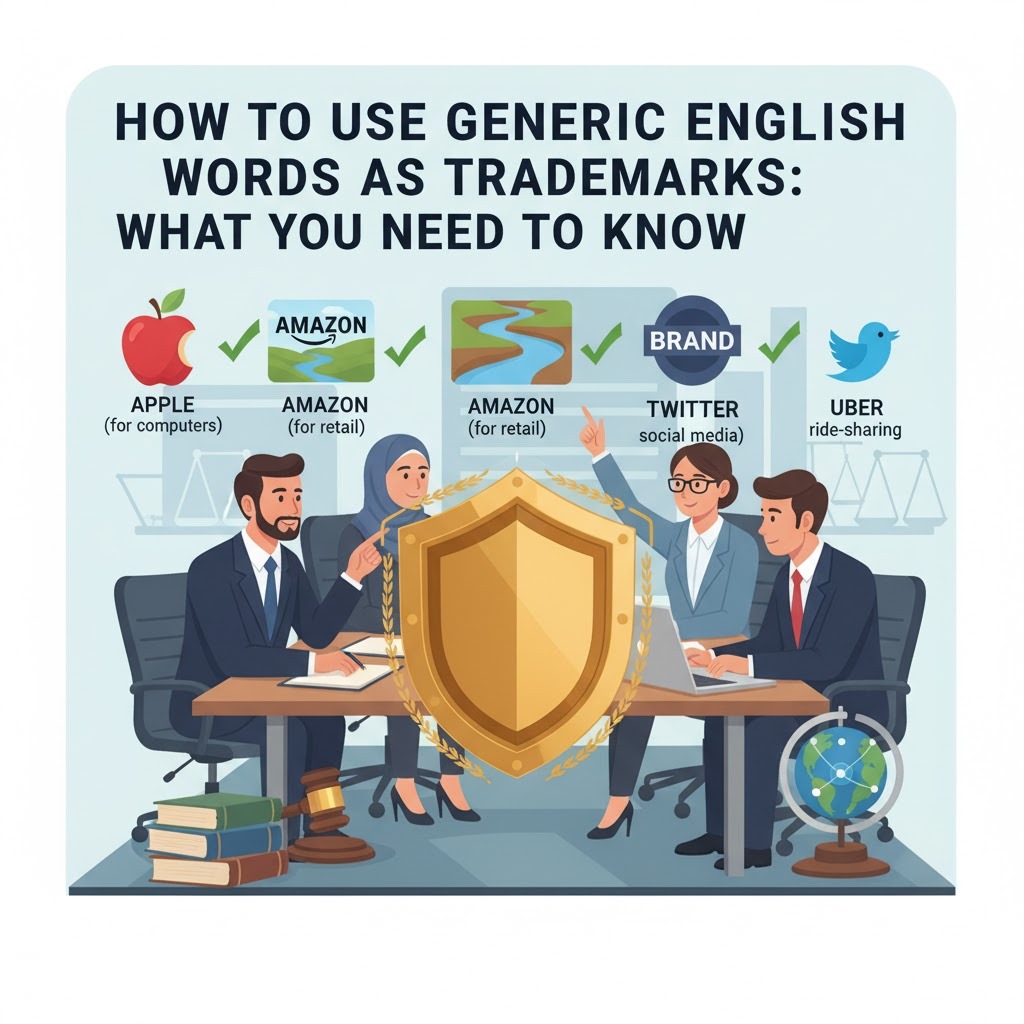
Introduction To Using Generic English Words As Trademark:
Miss A and Miss B both run thriving tie and dye businesses in Lagos. Their works are vibrant, colourful, and known for being eye catching. To attract more customers, both women often describe their fabrics as being made with “the brightest dyes.” One day, however, Miss B decided to take things a step further by not only registering “Brightest Dyes” as her business name with the Corporate Affairs Commission but also secures a trademark for the phrase. Soon after, she begins sending warnings to other tie and dye vendors, asking them to stop using “brightest dyes” in their social media bios, product labels, and advertisements.
Miss A is stunned. She has been using that phrase long before Miss B even entered the industry. To her, “brightest dyes” isn’t a brand name it’s just a way of describing the quality of her work. But now she wonders; has Miss B truly gained the exclusive right to those words? Can she stop others from using them in everyday business descriptions? This and many more are the questions this article seeks to answer, as it explores the legality of trademarking common English words under Nigerian law with special attention to the ongoing “Fastest Cakes” controversy and the recent social media debate surrounding the “Very Demure” phrase.
What says the law?
To understand whether Miss B can truly stop others from using “brightest dyes,” it’s important to first know what makes a word generic and how Nigerian law treats such words in trademark registration.
In trademark law, a generic word is one that names a product or describes what it is, rather than identifying who makes it. Words like “bread,” “soap,” “sugar,” simply tell us what something is or a quality of it not where it comes from. Because of that, the law generally refuses to grant anyone exclusive ownership over such words.
Under Section 9(1) of the Trade Marks Act (Cap T13 LFN 2004), a trademark must contain or consist of at least one of the following essential particulars:
- the name of a company, individual or firm represented in a special or particular manner;
- the signature of the applicant;
- an invented word; or
- a word or words having no direct reference to the character or quality of the goods and not being according to its ordinary signification a geographical name or a surname.
That last part is crucial as it means that words which directly describe the character, quality, or nature of the goods (like brightest, soft, sweet, fresh, or fast) are not registrable unless they are used in a way that gives them a distinctive character.
Furthermore, Section 9(2) empowers the Registrar to accept such descriptive or generic marks only if the applicant can prove that the mark has acquired distinctiveness. In other words, that the public now associates that word or phrase exclusively with that trader. This is known as acquired distinctiveness or secondary meaning.
So, while “Brightest Dyes” might sound catchy, it is also highly descriptive it tells customers that the dyes are bright. Unless Miss B can prove that people in the market now uniquely identify “Brightest Dyes” with her tie-and-dye business, the registration may not stand strong if challenged.
This same logic applies to brands like “Fastest Cakes.” The phrase merely describes a bakery that delivers cakes quickly. Without clear evidence of distinctiveness, such trademarks raise questions about whether the law should allow exclusive rights over common, descriptive English words that other businesses naturally need to use.
Conversely, it means that even if a word is descriptive like “Fastest Cakes” or “Brightest Dyes” it could still be registered and protected if the applicant proves that, through consistent and exclusive use, customers have come to see that phrase as pointing specifically to their business and not just a general description of products. That’s why the “Fastest Cakes” incident went viral, not just because of brand rivalry, but because it touched a nerve among small business owners who felt that common English words should remain open for everyone to use in fair trade.
[Our article on trademark is relevant here https://ekosolicitors.com/why-do-you-need-to-register-trademark-in-nigeria/ ]
What about when the trademarked name doubles as the business name?
Here lies where many small business owners get confused. Registering a business name with the Corporate Affairs Commission (CAC) does not automatically grant exclusive ownership or trademark rights over that name.
The Companies and Allied Matters Act (CAMA 2020) under sections 811-819, allows you to register any available name that is not identical with an existing one on the CAC’s register. This registration gives you the legal identity to operate under that name but only for identification and compliance purposes, not intellectual-property protection.
In other words, the CAC’s approval simply means no one else has this exact name as a registered business entity. It does not stop another person from using that same word or phrase in their branding, unless that person’s use amounts to passing off or infringes an already registered trademark.
This is why a trader can register “Brightest Dyes Enterprises” with the CAC but if another person has previously trademarked “Brightest Dyes” under the Trade Marks Act, the CAC registrant could still be asked to change their name or stop using it commercially.
Conversely, if no trademark exists, registering a generic or descriptive name with the CAC usually carries no liability, because the registration does not give you the monopoly rights that a trademark provides. The two systems business-name registration and trademark registration are separate, and this gap is exactly what fuels many of the current social-media disputes between brands.
Another example comes from the viral phrase “Very Demure, Very Mindful.” The phrase gained massive traction on TikTok in 2024 after a creator popularised it as part of a lifestyle meme encouraging subtle femininity and self-awareness. Not long after, news broke that another individual had applied to trademark the phrase, sparking outrage online. Many users felt it was unfair for someone to own a phrase that had become part of the cultural lexicon.
Although that incident took place outside Nigeria, the same legal reasoning would apply here. Under Section 9(1) of Nigeria’s Trade Marks Act, a phrase that directly describes a mood, character, or attitude like “Very Demure, Very Mindful” would typically not qualify for registration unless the applicant can show that it has acquired distinctiveness as a source identifier for specific goods or services (say, for clothing, perfumes, or journals).
However, even if the phrase were registered, enforcing it would be extremely difficult. Once a word or phrase becomes part of everyday social language used by millions of people as slang or expression it loses its ability to distinguish one person’s goods from another’s. This is what is known in trademark law as genericide and it is when a mark becomes so common that it stops functioning as a trademark.
In the Nigerian context, imagine someone trademarking “No Wahala”, “Soft Life”, or “E Choke.” Even if the mark passes initial registration, the wide public use would make it nearly impossible to enforce without backlash. This is relevant to the ongoing suit between Sabinus and Peak over the phrase “something hooge.”
Summarily, in the course of this discussion, one truth keeps showing up, intellectual property law isn’t just for big corporations anymore. In the digital age, where a catchy phrase can go viral overnight, every creator, influencer, and small business owner needs to understand how far protection actually goes.
Things to note:
- Registering your business name with the CAC gives you legitimacy but not exclusivity. It doesn’t stop someone from using a similar name unless that name has also been protected under the Trade Marks Act.
- Registering a trademark gives stronger protection, but only for marks that are distinctive, not generic. So if your brand name merely describes what you do like “Soft Bread,” “Quick Clean,” or “Brightest Dyes” you may struggle to enforce it.
- Before investing in logos, ads, and packaging, do a trademark availability search. It’s cheaper to check first than to rebrand later.
- If you coin a unique phrase (like “Something Hooge”), act fast. File an application early so you have legal standing before bigger companies use it. But remember your registration only covers the classes of goods or services you specify.
- If you’re a content creator, understand that trends don’t automatically translate into ownership. Virality doesn’t create legal rights registration does.
Ultimately, the law aims to balance fairness and creativity, protecting brands that have invested in originality, while keeping everyday language free for everyone to use. The smarter you are about that balance, the better your brand will age in a competitive market. Because at the end of the day, the goal isn’t to own every word that shines. It’s to make your own name shine bright enough that no one can confuse it for another.
CONTRIBUTORS

Managing Partner EKO SOLICITORS AND ADVOCATES

Counsel, EKO SOLICITORS AND ADVOCATES

CHINWENDU MBANU
Graduate Trainee, EKO SOLICITORS AND ADVOCATES
(Generic English Words As Trademark, Generic English Words As Trademark, Generic English Words As Trademark, Generic English Words As Trademark, Generic English Words As Trademark, Generic English Words As Trademark,Generic English Words As Trademark)